Guide · Infrared Saunas
Low EMF Infrared Saunas: How to Read Lab Reports (Not Marketing Badges)
What 'low EMF' really means: milligauss, distance, RMS vs peak, named labs, which sauna brands publish Vitatech reports, and how to meter your own.
HeatColdLab is reader-supported and may earn a commission from links on this page. We have not metered these saunas ourselves; figures come from published lab reports and manufacturer data. See How We Review.
Almost every infrared sauna sold in the U.S. carries a “low EMF” or “ultra-low EMF” badge. That badge, on its own, tells you nothing. Two brands can both be telling the truth and publish numbers that differ by a factor of ten, because they measured in different places with different methods.
Below: what the numbers mean, how to read an EMF report, which brands publish named-lab data, and how to sanity-check a cabin with your own meter. We worked from the published reports themselves (Sun Home, Sunlighten and Clearlight all post Vitatech documents), manufacturer specs, and guidance from the World Health Organization and ICNIRP. We haven’t metered these cabins ourselves. If you remember one thing from this page, make it this: a reading without a distance is just a number.
What mG actually means
“EMF” covers two separate things:
- Magnetic fields, measured in milligauss (mG) or microtesla (µT). 1 µT = 10 mG. This is the number most sauna brands quote. It comes from current flowing through heaters and wiring.
- Electric fields, measured in volts per meter (V/m). These come from voltage, even when little current flows. Some reports include them; many marketing pages do not.
Sauna heaters run on household AC power at 60 Hz in the U.S., so the relevant fields are extremely low frequency (ELF). This is a different category from radiofrequency exposure from phones or Wi-Fi, and different again from the infrared light the heaters are designed to emit.
The reference points, and why they are far apart
| Reference | Level | What it is |
|---|---|---|
| ICNIRP 2010 general-public reference level | 200 µT (2,000 mG) | International exposure guideline for 50/60 Hz magnetic fields |
| ICNIRP 1998 reference level (still cited by WHO) | 100 µT (1,000 mG) at 50 Hz | Earlier guideline |
| Vitatech recommended long-term threshold | 10 mG | The testing lab’s own precautionary threshold, used in its sauna reports |
| Common buyer preference | under about 3 mG at the seat | A wellness-community rule of thumb, not a standard |
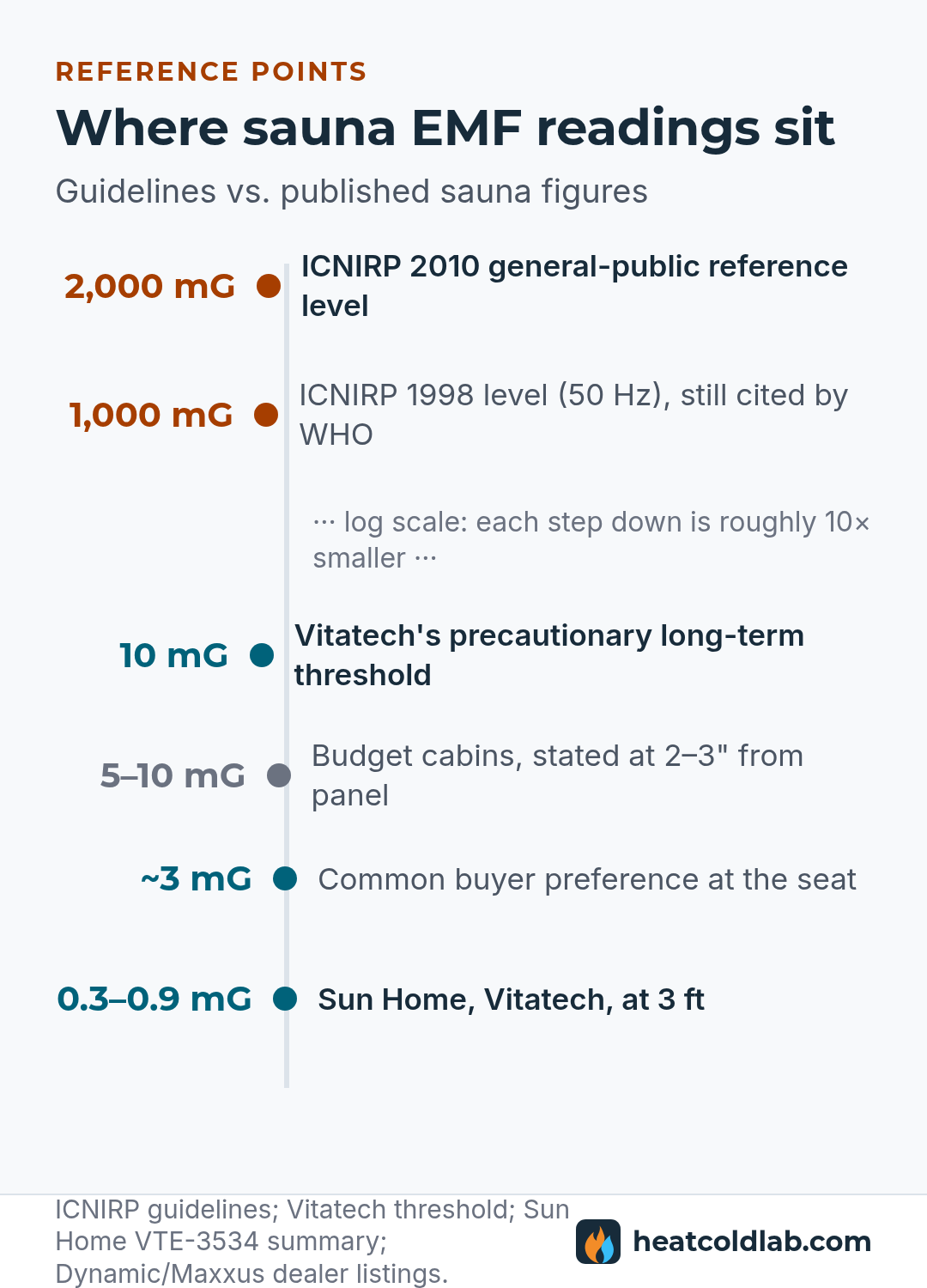
The International Agency for Research on Cancer (IARC) classified ELF magnetic fields as “possibly carcinogenic to humans” (Group 2B) in 2002, based mainly on studies associating average residential exposures above roughly 3–4 mG with childhood leukemia. The WHO has said that no adverse health effects from low-level, long-term power-frequency exposure have been confirmed, while research continues. The U.S. National Institute of Environmental Health Sciences has a plain-language summary of the same evidence. Put simply, choosing a well-documented low-EMF cabin is a reasonable precaution for something you may sit inside several times a week, but it is not a proven health requirement.
Distance matters more than the badge
Magnetic field strength drops off quickly as you move away from the source. That is why the measurement distance is the single most important detail in any EMF claim.
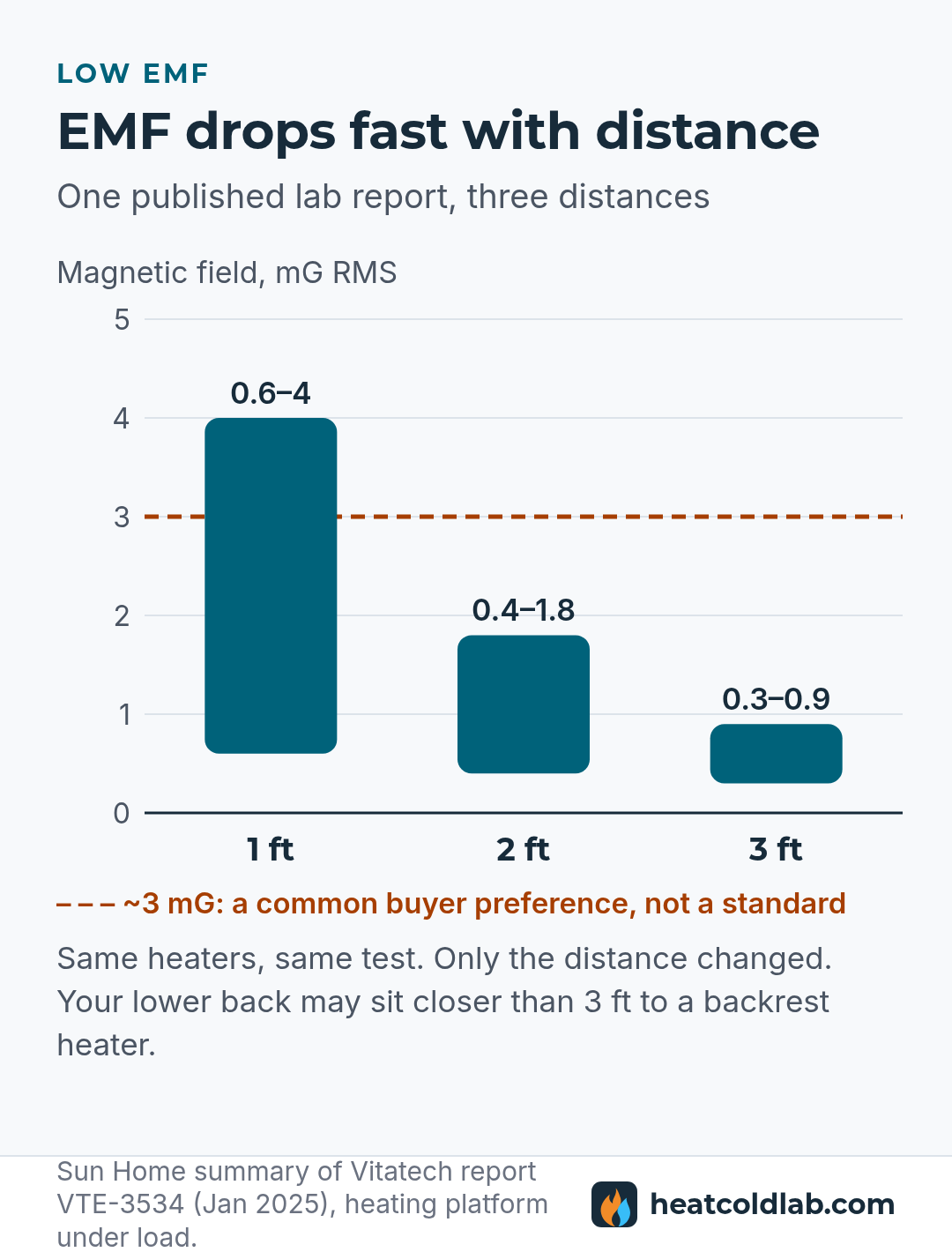
Sun Home’s own published Vitatech summary shows this clearly. Testing the same heating platform under load, Vitatech reported:
| Distance from heater | Magnetic field (mG RMS) |
|---|---|
| 1 foot | 0.6–4.0 |
| 2 feet | 0.4–1.8 |
| 3 feet (representative seated distance) | 0.3–0.9 |
Sun Home’s “under 0.5 mG” headline falls inside the 3-foot range. That is legitimate, but your lower back may be closer than three feet to a backrest heater, so the 1-foot figure is also relevant.
Now compare budget cabins. Dynamic and Maxxus dealer listings state EMF of 5–10 mG measured 2–3 inches from the heating panels (some Dynamic listings say 6–10 mG at 6–8 inches). Measured that close, a premium heater would also read much higher than its seated-distance figure. The numbers are not comparable without matching distances.
How to read an EMF report
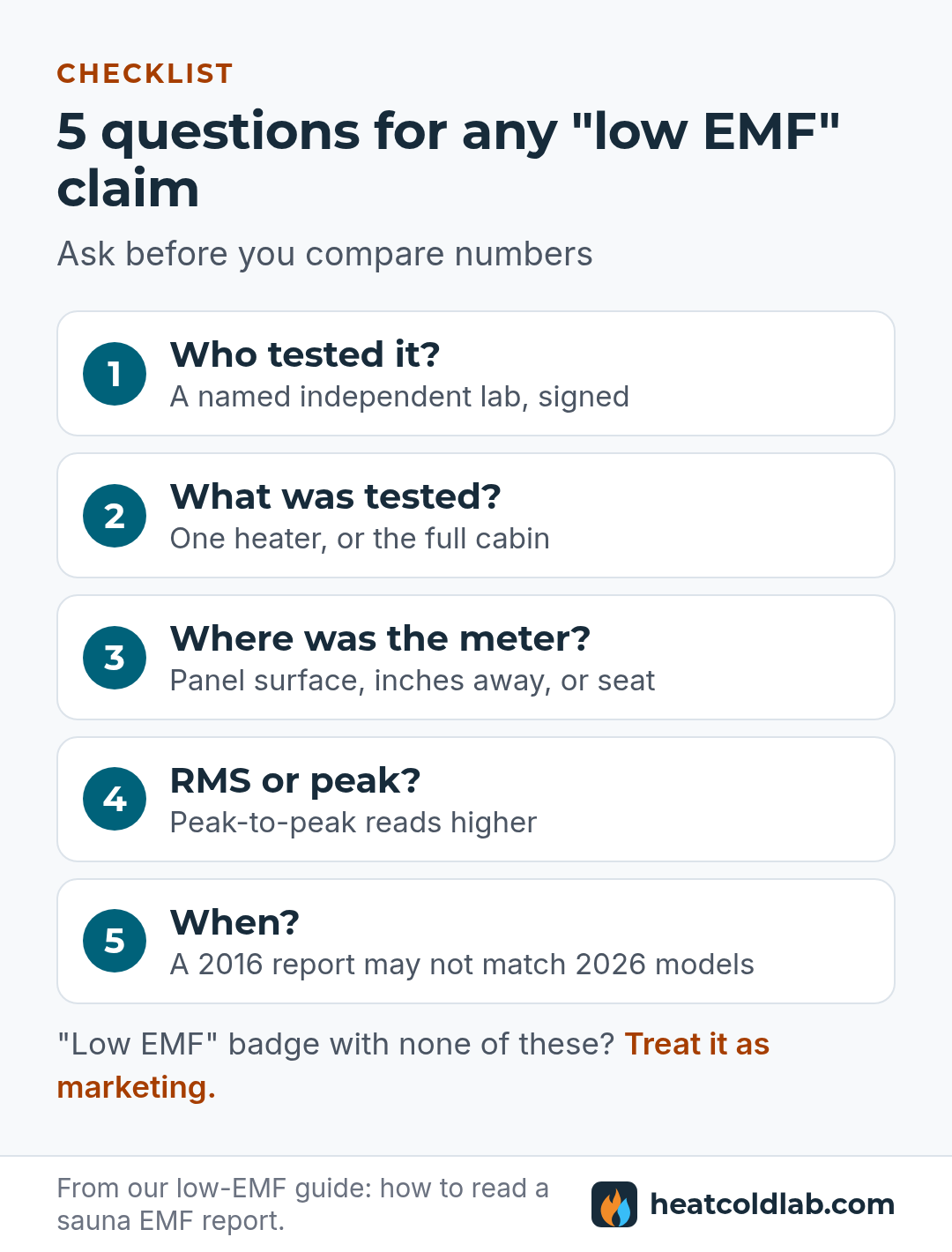
When a brand sends you a report (or a link to one), check these five things:
- Who tested it? An independent lab with its name, address and engineer’s signature on the document. Vitatech Electromagnetics (San Diego) is the lab you will see most often in this category.
- What exactly was tested? A single heater on a bench, or a complete cabin? Which model? Sunlighten’s report lists individual models; Clearlight’s 2016 report tested heaters; Sun Home’s summary covers its “heating platform” and notes model-specific reports are available on request.
- Where was the meter? Panel surface, inches away, or seated position? At what height?
- RMS or peak? RMS reflects the effective field over time; peak-to-peak reads higher for the same field. Clearlight’s 2016 report states its magnetic readings are peak-to-peak; Sun Home’s and Sunlighten’s are RMS. Neither is wrong, but you cannot compare them directly.
- When? Heater designs change. A 2016 or 2021 report may not reflect a 2026 production run. Ask whether the current model was tested.
Also look for the electric field (V/m). A report that covers only magnetic fields is telling half the story.
Cabin vs heater tests
The most useful test measures a complete, assembled cabin with all heaters on, at the positions where your body sits. A heater-only test is still valuable (it shows the panel design is low-field), but it does not capture wiring runs, control boxes, lighting or audio components inside the cabin.
| Brand | What the published report covers | Lab / date | Key figures (as published) |
|---|---|---|---|
| Sun Home | Heating platform under load at 1, 2 and 3 ft; model-specific reports on request | Vitatech, report VTE-3534, Jan 2025 | 0.6–4.0 mG (1 ft), 0.4–1.8 (2 ft), 0.3–0.9 (3 ft), RMS |
| Sunlighten | Per-model cabin testing at Sunlighten’s warehouse | Vitatech, final submission Jan 2021 | Amplify II 0.11 mG, mPulse Believe 0.16, mPulse Conquer 0.66, Signature IV 0.86, Solo 0.57 (RMS) |
| Clearlight | Heater testing with contour maps at multiple heights | Vitatech, Sept 2016 | Mapped readings at the tested heights reported below 0.5 mG (peak-to-peak); electric fields reported in V/m |
| Dynamic / Maxxus | Manufacturer-stated | No named independent lab | 5–10 mG at 2–3 in. (standard models); “near-zero” variants advertise under 2–3 mG |
Sources are linked at the end. Report dates matter: Sunlighten’s and Clearlight’s reports predate some current model versions.
Named-lab brands worth shortlisting
Sun Home Equinox 2 (full spectrum)
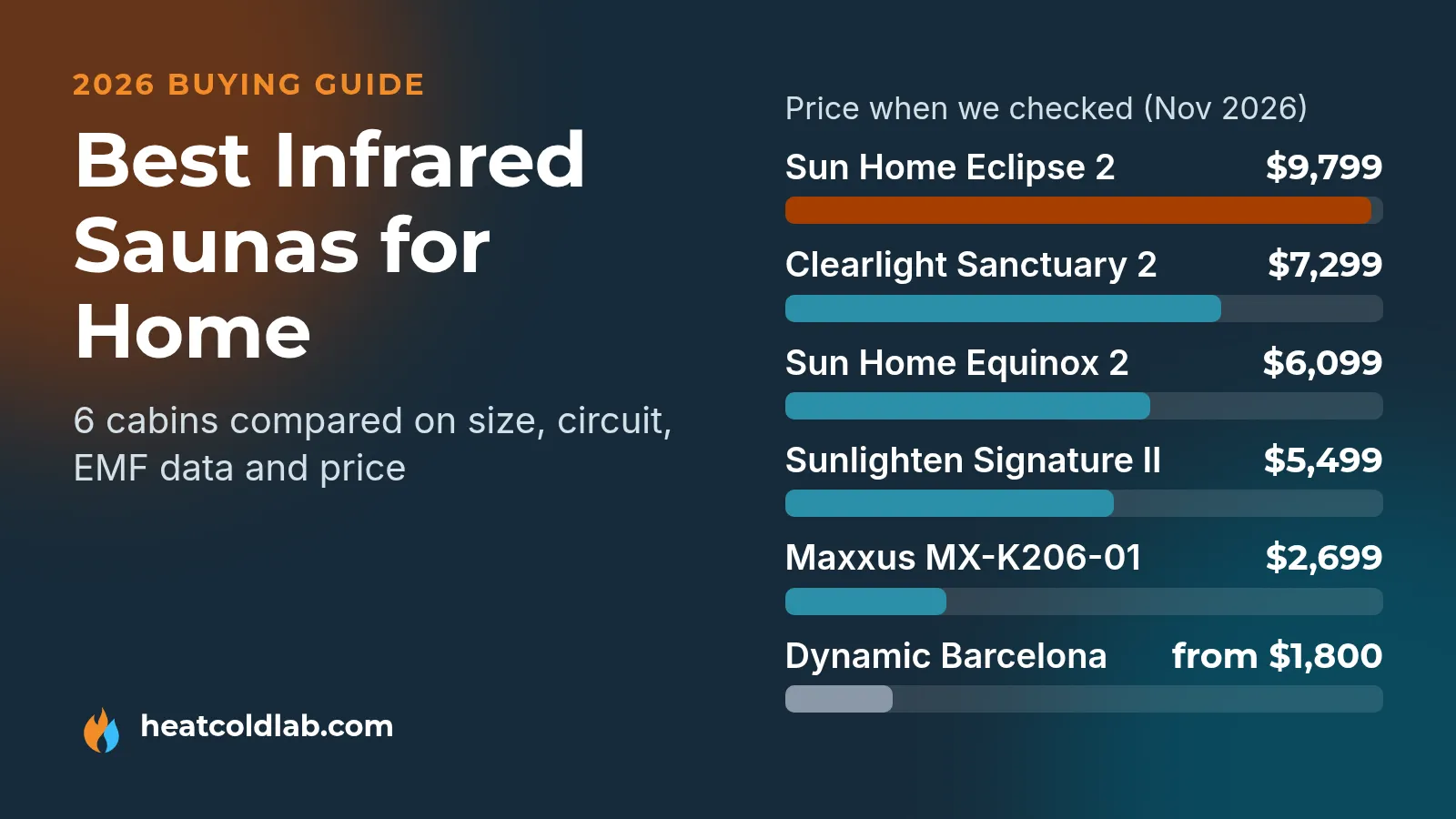
About $6,099 (Nov 2026). The most transparent current documentation we found: a dated, numbered Vitatech summary with distances and method (fluxgate magnetometer, RMS, 10–3,000 Hz). Sun Home also states ETL certification. 120V/20A dedicated circuit. See the Equinox 2
Sunlighten Amplify II or Signature II
$5,799–$5,999 for the Amplify II, $5,499 for the Signature II (Nov 2026). Sunlighten’s Vitatech report lists the Amplify II at 0.11 mG RMS, one of the lowest figures in any published sauna report we read. Ask Sunlighten whether the current “V2” Amplify II was tested, since the report dates from January 2021. See the Amplify II · See the Signature II
Clearlight Sanctuary 2
About $7,299 (Nov 2026). Clearlight has published Vitatech heater reports for years and backs the Sanctuary with a limited lifetime residential warranty. The trade-off: its public report is a 2016 heater test rather than a recent full-cabin test, so request current documentation. We’d still shortlist it; we’d just ask the question first. See the Sanctuary 2
Budget “ultra-low EMF” options
If your budget is under about $3,000, Dynamic and Maxxus (both sold under the Golden Designs umbrella) are the names you will see most. Their standard models state 5–10 mG at 2–3 inches. Both brands also sell “near-zero” or “Elite” variants; for example, Amazon has carried a “Dynamic Barcelona Elite DYN-6106-01 Ultra Low EMF (Under 3 MG)” listing alongside a standard “Low EMF (Under 8 MG)” version. Those figures are manufacturer-stated without a named independent lab, so treat them as claims and verify with a meter during the return window.
See the Dynamic Barcelona · See the Maxxus MX-K206-01
Low EMF with red light, and low EMF vs full spectrum
Two popular searches combine EMF with other features:
- Low EMF with red light therapy. Red light panels are LED devices with their own drivers and power supplies, so they are a separate EMF source from the heaters. Sun Home markets “patented shielding” on its Eclipse line; ask whether the red light panels were included in any EMF test. See our red light sauna guide.
- Low EMF vs full spectrum. These are not opposites. Full spectrum describes the wavelengths a heater emits; EMF describes the fields from its electrical components. Sun Home’s Equinox and Sunlighten’s Amplify are both full-spectrum and both publish low readings. See full spectrum vs far infrared.
How to meter your own sauna
You can do a useful sanity check with a consumer meter. It will not match lab precision, but it will catch a cabin that is wildly off its claim.
- Pick the right meter. You need one that reads AC magnetic fields in mG at 60 Hz. Tri-field meters (such as the AlphaLab TriField line) also read electric fields and RF; a single-axis meter must be rotated to find the maximum.
- Heat the cabin to operating temperature with all features you normally use (lights, audio, red light) switched on.
- Measure where you sit. Take readings at lower back, mid-back, shoulders and calves in your normal position, plus at the bench surface and right next to each heater.
- Record distance for each reading. A note like “2 in. from backrest heater: X mG; seated lower back: Y mG” lets you compare against the maker’s report.
- Check the wiring. Readings near control boxes and the power cord route are often higher than at heaters.
- Act within the return window. If your seated readings are dramatically higher than the published report at a similar distance, contact the seller in writing while you still have options. Heads-up: many sauna sellers do not accept returns once a cabin is opened (Sunlighten, for example, states opened saunas cannot be returned), so ask about EMF-related remedies before you buy.
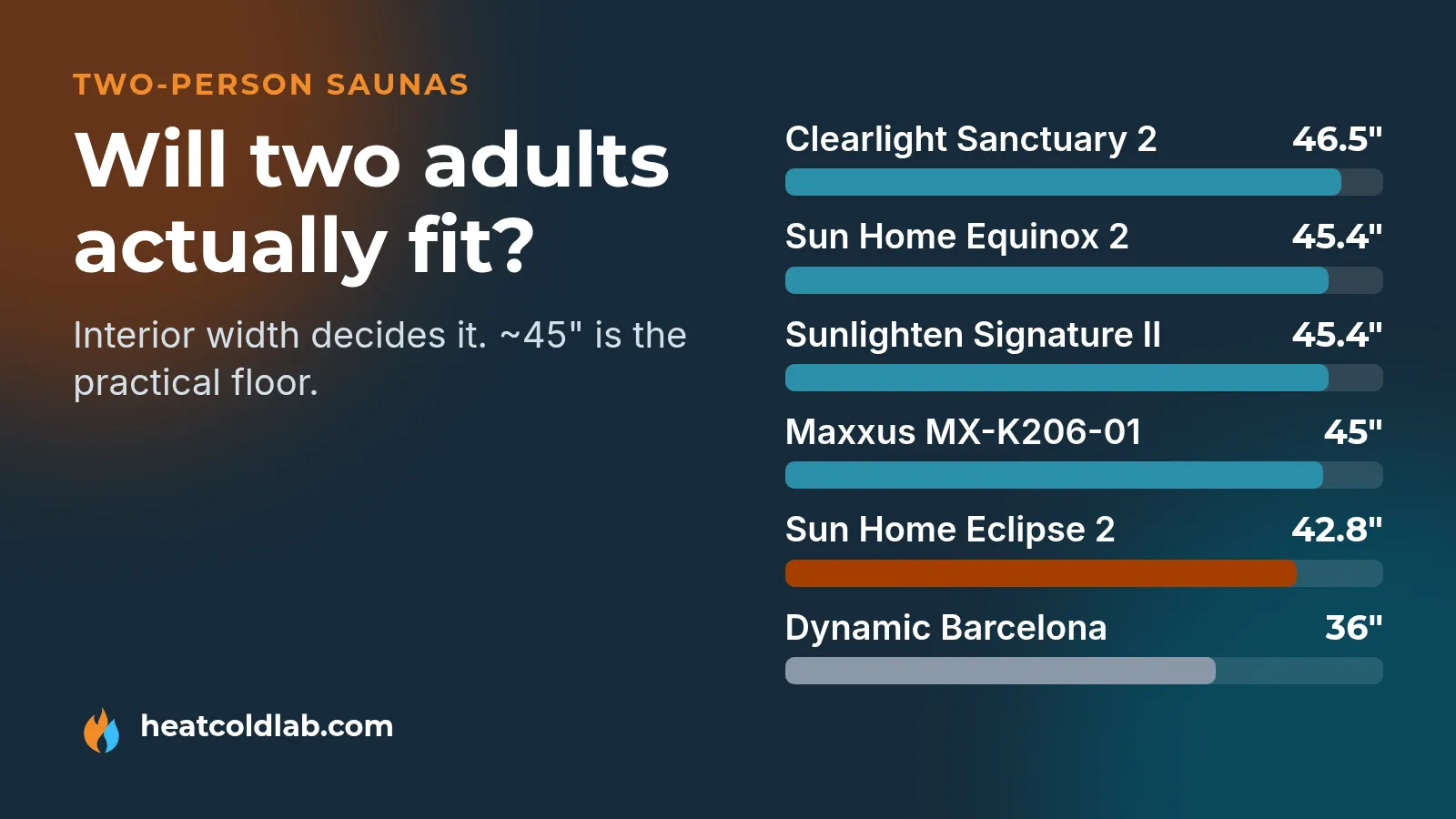
For broader buying advice, start with our best infrared saunas for home or best 2-person infrared saunas. EMF also depends on wiring, so read our electrical guide before installation.
FAQ
What does low EMF mean in an infrared sauna?
There is no legal or industry definition. It usually means the maker claims the heaters produce a weak extremely-low-frequency magnetic field, typically stated in milligauss (mG). The claim is only meaningful if it names a lab, a measurement distance and a method.
What is a good EMF reading for an infrared sauna?
No sauna-specific health threshold exists. Many buyers prefer readings under about 3 mG at the seated position, and Vitatech Electromagnetics uses 10 mG as its recommended long-term threshold. Regulatory reference levels are far higher: ICNIRP’s 2010 guideline is 200 µT (2,000 mG) for the general public at power frequencies.
Which infrared sauna brands publish third-party EMF reports?
Sun Home publishes a Vitatech summary (report VTE-3534, January 2025) with readings at 1, 2 and 3 feet. Sunlighten publishes a Vitatech report (January 2021) listing per-model readings. Clearlight publishes Vitatech heater test reports. Dynamic and Maxxus publish manufacturer-stated figures without a named independent lab.
Why do EMF numbers differ so much between brands?
Mostly because of distance and method. Magnetic fields fall off quickly with distance, so a reading 2–3 inches from a panel will be much higher than one at 3 feet. RMS vs peak readings and different frequency ranges also change the number.
Is EMF from an infrared sauna dangerous?
Health agencies have not confirmed harm from low-level power-frequency fields. The WHO says no adverse effects from low-level, long-term exposure have been confirmed, while IARC classifies ELF magnetic fields as ‘possibly carcinogenic’ (Group 2B) based on limited evidence. Choosing a well-documented low-EMF cabin is a reasonable precaution, not a medical necessity.
Can I measure my sauna’s EMF myself?
Yes, roughly. Use a gaussmeter that measures AC magnetic fields, heat the sauna to operating temperature, and measure at your back, calves and shoulders in your normal seated position. Consumer meters are less precise than lab equipment, so look for big discrepancies, not decimal points.
Do you test EMF yourselves?
Not at this time. HeatColdLab compares published lab reports and manufacturer data. We do not own these saunas and have not metered them. See How We Review.
Sources
- Sun Home: What Is Low EMF in a Sauna? (Vitatech VTE-3534 summary), Safety testing page, Full-spectrum collection
- Sunlighten: Vitatech EMF test results for Sunlighten saunas (PDF, Jan 2021), Low EMF page
- Clearlight: Vitatech AC ELF EMF test report (PDF, Sept 2016), True Wave & Low EMF/ELF
- Dynamic / Maxxus: Premium Saunas Barcelona listing, Sun Valley Saunas Maxxus listing, Amazon Barcelona Elite listing
- ICNIRP: Guidelines for limiting exposure to time-varying electric and magnetic fields (1 Hz–100 kHz), 2010
- WHO: Radiation: Electromagnetic fields
- IARC: Monographs Volume 80, Non-Ionizing Radiation, Part 1: Static and Extremely Low-Frequency Electric and Magnetic Fields (2002)
- NIEHS: Electric & Magnetic Fields
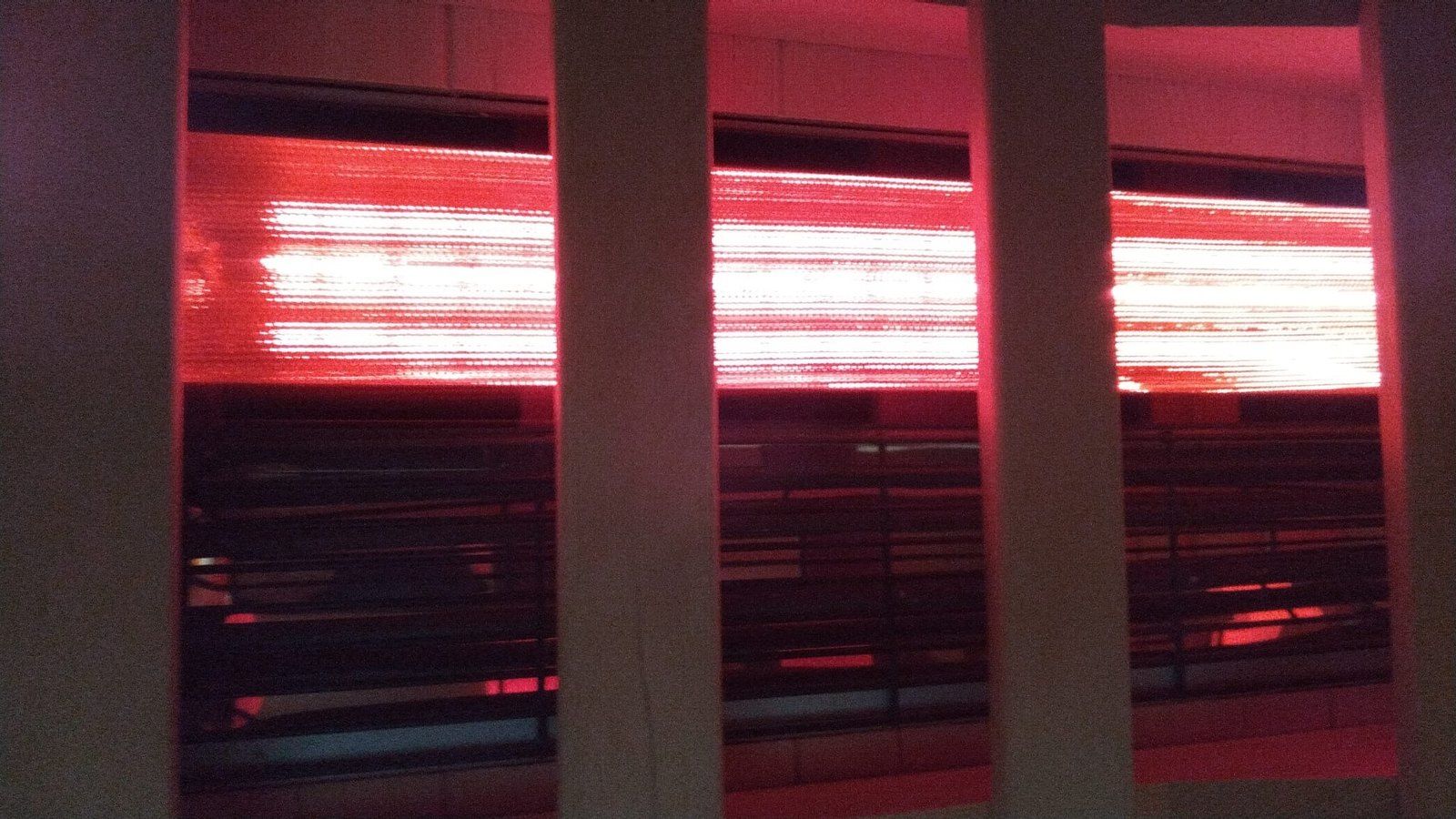
- Hero photo: “Infrarotstrahler” by Mona Hitzenauer, Wikimedia Commons (CC0, rotated and cropped)