Comparison · Infrared Saunas
Full Spectrum vs Far Infrared Sauna: Heaters, Temp & Who Should Buy Which
Full spectrum vs far infrared saunas compared: wavelengths, heater types, max temps, circuits, price gaps and what the research actually supports.
HeatColdLab is reader-supported and may earn a commission from links on this page. We do not physically test saunas; see How We Review.
“Full spectrum” is one of the most profitable words in the infrared sauna business. It sounds like more of everything, and it usually costs more. So what does it physically change, and does that matter for you?
Below we explain the wavelengths in plain English, compare real full-spectrum and far-infrared cabins from the same brands (so the price and spec gap is easy to see), and lay out what the research does and doesn’t support. Our short version, up front: full spectrum is a heat preference, not a health upgrade. Specs and prices come from manufacturer pages we checked in November 2026. We haven’t physically tested these cabins.
Wavelengths in plain English
Infrared is light just beyond what your eyes can see. The International Commission on Illumination (CIE) divides it into three bands (IR-A, IR-B, IR-C):
| Band | Wavelength range | Common sauna label |
|---|---|---|
| IR-A | 780–1,400 nm | Near infrared |
| IR-B | 1,400–3,000 nm | Mid infrared |
| IR-C | 3,000 nm–1 mm | Far infrared |
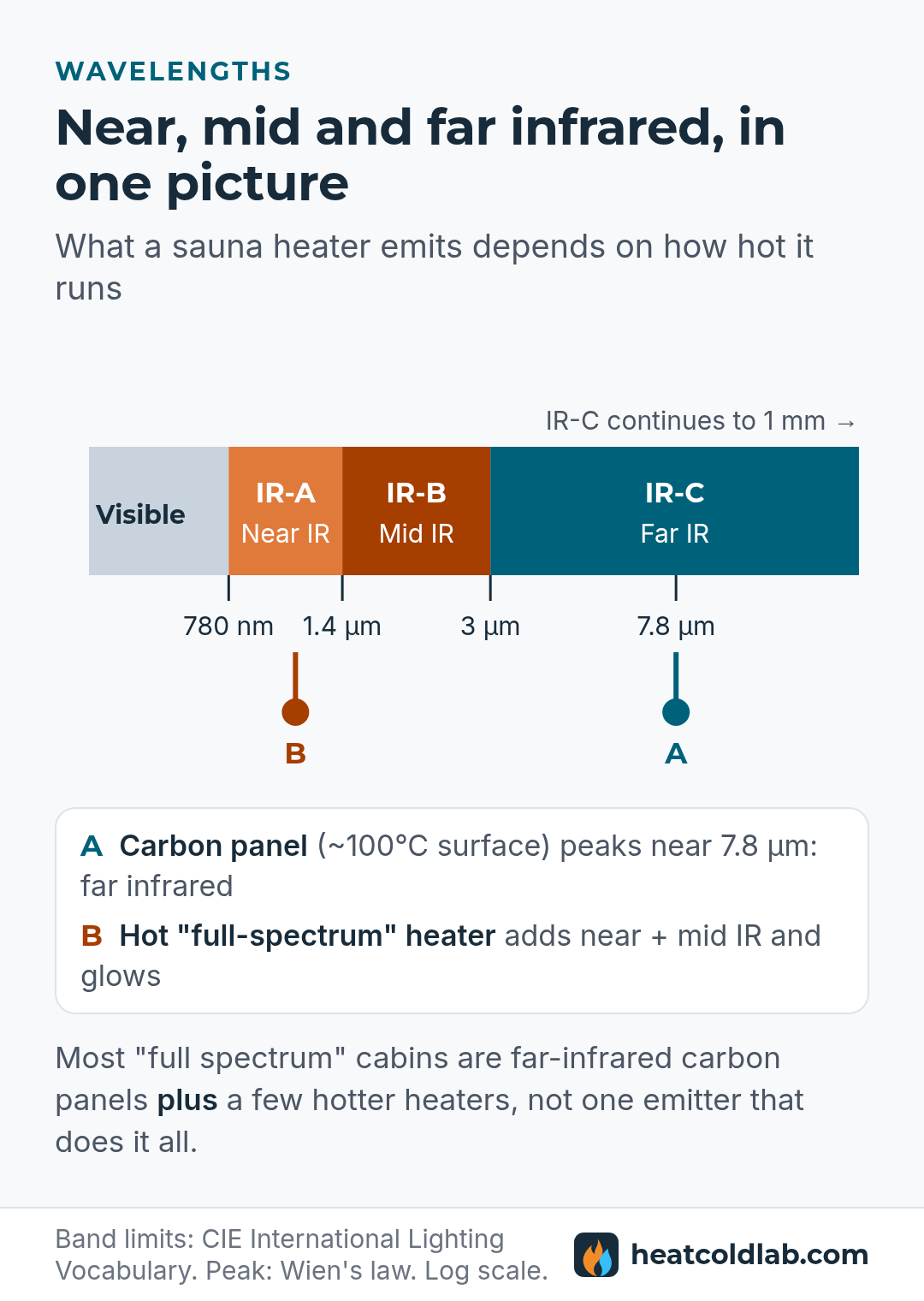
What a heater emits depends mostly on how hot its surface gets. Physics (Wien’s law) tells us a surface at around 100°C radiates most strongly at roughly 7.8 micrometers, firmly in the far-infrared band. That is why carbon panel heaters, which run at relatively low surface temperatures, are “far infrared.”
To get meaningful near-infrared output, you need a much hotter emitter, such as a halogen or incandescent-style element. Those also glow visibly red or orange. Sun Home describes its full-spectrum system as “halogen + carbon,” and Clearlight’s Sanctuary 2 mounts two 500W full-spectrum heaters on the front wall alongside its far-infrared panels. In practice, almost every “full spectrum” cabin is far-infrared panels plus a few hotter full-spectrum heaters, not one magic emitter.
Heat and warm-up claims
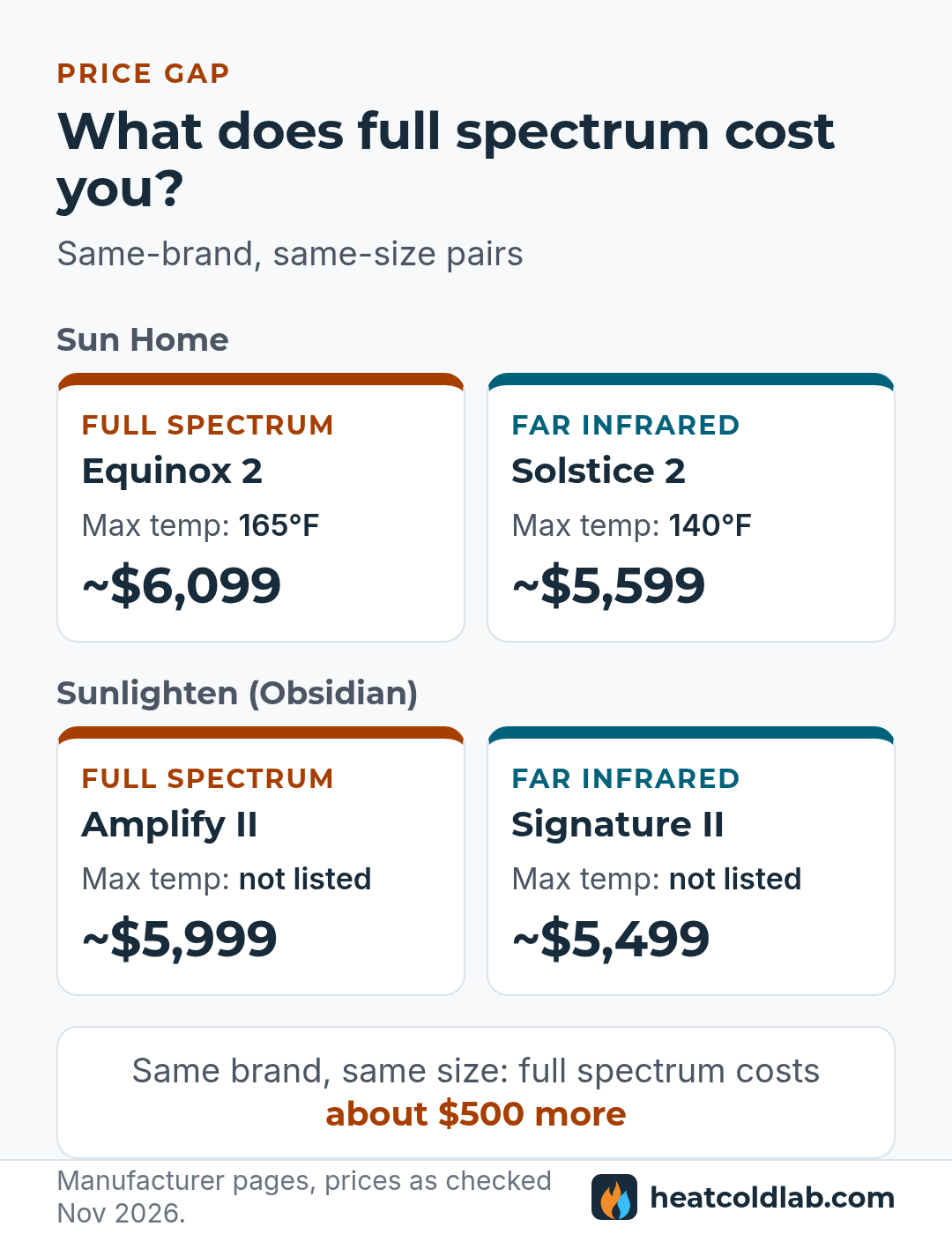
Because full-spectrum heaters are hotter and more intense, full-spectrum cabins tend to list higher maximum temperatures. The cleanest comparison is within one brand:
| Model | Heat type | Heaters (per maker) | Max temp (per maker) | Price (Nov 2026) |
|---|---|---|---|---|
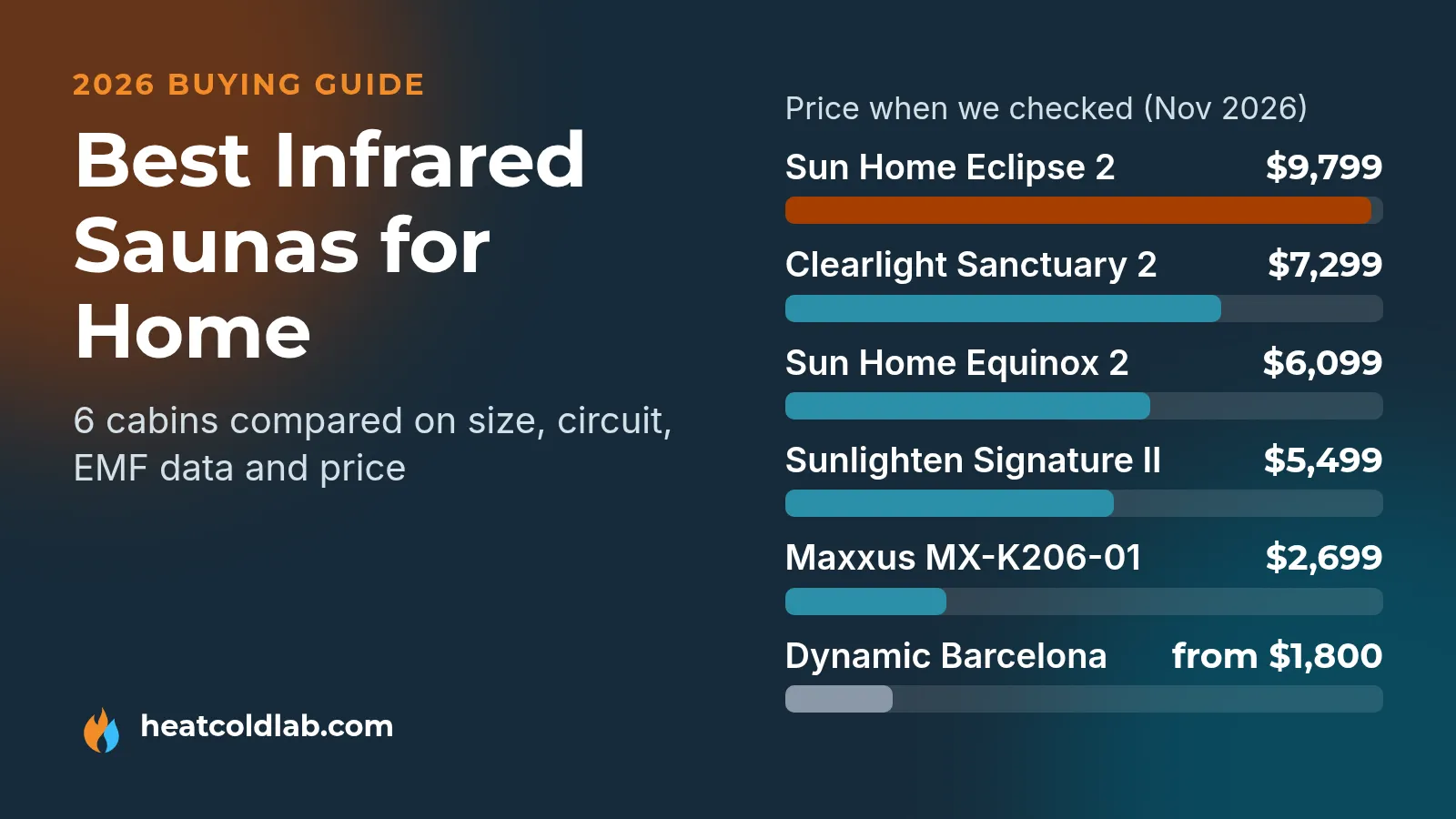
| Sun Home Equinox 2 | Full spectrum | 4 FIR + 2 full spectrum | 165°F (typical ~150°F) | around $6,099 |
| Sun Home Solstice 2 | Far infrared | 9 FIR | 140°F | around $5,599 |
| Sunlighten Amplify II (Obsidian) | Full spectrum | 5 FIR + 3 full spectrum | not listed on page | around $5,999 |
| Sunlighten Signature II (Obsidian) | Far infrared | 9 FIR | not listed on page | around $5,499 |
| Clearlight Sanctuary 2 | Full spectrum | FIR panels + 2 x 500W full spectrum | not listed on page | around $7,299 |
| Maxxus MX-K206-01 | Far infrared | 6 carbon FIR | 145°F | around $2,699 |
| Dynamic Barcelona | Far infrared | 6 carbon FIR | 140°F (ideal 118–132°F) | around $1,800–$2,100 |
Warm-up times are harder to compare because makers state them differently. Sun Home says its Equinox heats roughly 1°F per minute up to about 135°F, then more slowly, and recommends a 15–20 minute preheat to reach 130–145°F. Sunlighten’s FAQ recommends preheating 45–60 minutes and says its saunas heat about one degree per minute depending on room temperature. Room temperature, cabin size and whether you close the vent all change real-world numbers.
A higher air temperature is not the whole story. Infrared cabins heat your body partly by direct radiation, so many owners report a good sweat at 120–140°F. If you already know you like a very hot cabin, full spectrum is more likely to satisfy you. If you plan long, moderate sessions, far infrared is usually enough.
Circuit differences
Good news: at two-person size, full spectrum usually does not change your wiring.
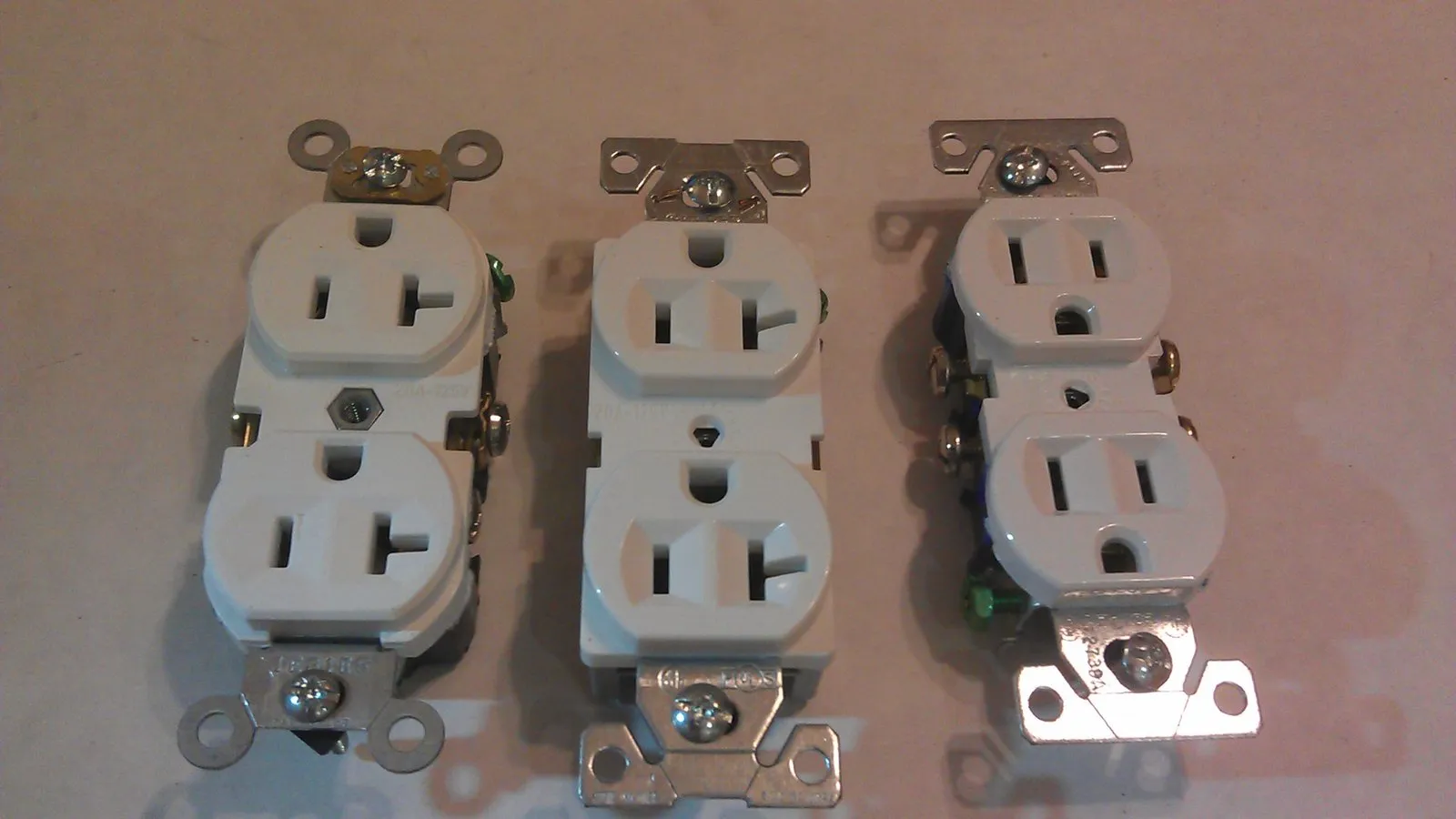
- Sun Home Equinox 2 (full spectrum): 120V, 1,880W, 15.67A, dedicated 20A, NEMA 5-20.
- Sun Home Solstice 2 (far infrared): dedicated 120V/20A GFCI circuit, NEMA 5-20.
- Sunlighten Amplify II (full spectrum): 120V, 1,880W, 15.67A, NEMA 5-20R.
- Sunlighten Signature II (far infrared): 120V, 2,006W, dedicated 20A, NEMA 5-20.
- Clearlight Sanctuary 2 (full spectrum): 120V, 2,260W, 18.83A, 20A outlet.
Requirements jump when you add red light or size up. Sunlighten’s Amplify II RED (full spectrum plus near-infrared red light heaters) needs a dedicated 240V/20A circuit, and Sun Home’s Eclipse 2 with integrated red light needs 120V/30A. See our electrical guide before you commit.
Evidence limits: what the research actually used
This is where the marketing and the science part ways.
Most infrared sauna research used far-infrared cabins. Japan’s “Waon therapy” studies, the best-known clinical infrared sauna research, use a far-infrared dry sauna held at 60°C (140°F) for 15 minutes, followed by 30 minutes resting under a blanket. In the multicenter WAON-CHF randomized trial of 149 hospitalized patients with advanced heart failure, 10 days of Waon therapy improved symptom class, six-minute walk distance and heart size on X-ray versus control, although the primary blood-marker endpoint (BNP) did not reach statistical significance (Tei et al., Circulation Journal, 2016). Earlier work found repeated thermal therapy improved blood-vessel function in people with coronary risk factors (Imamura et al., JACC, 2001).
A 2009 review of far-infrared sauna studies found “limited moderate evidence” for normalizing blood pressure and treating heart failure, weaker evidence for chronic pain, fatigue and obesity, and evidence against cholesterol-lowering claims (Beever, Canadian Family Physician, 2009). A small pilot in rheumatoid arthritis and ankylosing spondylitis patients found infrared sauna sessions were well tolerated with short-term reductions in pain and stiffness (Oosterveld et al., Clinical Rheumatology, 2009).
We found no clinical trial showing full-spectrum cabins outperform far-infrared ones for any health outcome. Claims that near-infrared heaters provide “cellular” benefits usually borrow from photobiomodulation (red light therapy) research, which uses LEDs or lasers at specific wavelengths and measured doses. Sauna heaters do not publish that kind of dose data. Our red light sauna guide explains the difference.
None of this makes full spectrum a scam. It delivers more intense heat, and plenty of people simply like that better. Buy it for the experience. Don’t buy it for a promised health edge.
Full-spectrum marketing claims, decoded
A few phrases come up on almost every full-spectrum product page. Here is how to read them:
- “Deeper penetration.” Near-infrared light does penetrate skin further than far-infrared before it is absorbed, which is well established in optics. Whether that translates into a measurable health benefit from a sauna heater, at the distances and doses inside a cabin, has not been shown in clinical trials.
- “All wavelengths 100% of the time.” Clearlight uses this phrasing for its True Wave full-spectrum system. It describes the heater design, not a health outcome. It is a reasonable reason to prefer the heat, not a reason to expect a different result.
- “Detox.” Sweating removes water and small amounts of other substances, but the 2009 review we cite above found no good evidence that far-infrared saunas lower cholesterol, and we found no trial showing full spectrum “detoxes” better.
- “Clinically shown.” Ask which product, which heater and which study. Some brands cite research done on their own far-infrared heaters, which does not automatically carry over to their full-spectrum models.
The best way to cut through it: compare published specs (heater count and type, max temperature, circuit, EMF report, warranty) and decide whether the extra heat intensity is worth about $500 to you.
Best full-spectrum picks
Sun Home Equinox 2
About $6,099 (Nov 2026). Two 500W full-spectrum panels plus four far-infrared heaters, 165°F max, 120V/20A, Vitatech EMF summary, 7-year warranty on cabinetry and heaters. Our overall favorite in best infrared saunas for home. See the Equinox 2
Sunlighten Amplify II
$5,799 to $5,999 depending on wood (Nov 2026). Five far-infrared plus three full-spectrum heaters in the same shell as the Signature II, on a 120V circuit. Sunlighten’s 2021 Vitatech report lists the Amplify II at 0.11 mG RMS (ask whether the current V2 was retested). See the Amplify II
Clearlight Sanctuary 2
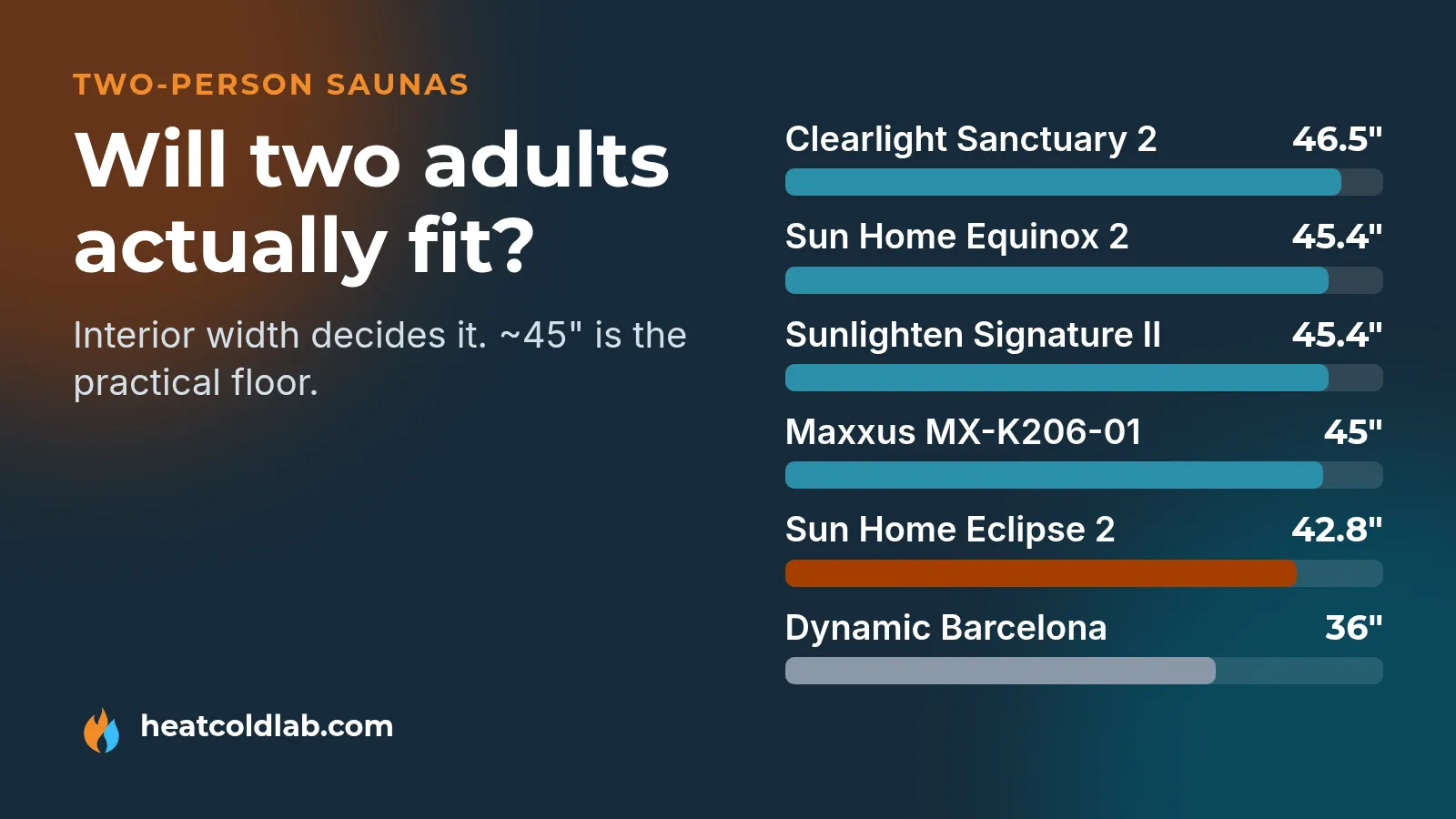
About $7,299 (Nov 2026). The roomiest of the three (46.5” interior width), True Wave heaters on almost every surface, and a limited lifetime residential warranty. Optional red light CORE Tower available (around $1,399 add-on). See the Sanctuary 2
Best far-infrared picks
Sunlighten Signature II
$5,499 on sale (Nov 2026). Nine SoloCarbon far-infrared heaters, one-button operation, 120V/20A. The straightforward pick if you want the heat type closest to the published research, and the one we’d lean toward for long, moderate sessions. See the Signature II
Sun Home Solstice 2
About $5,599 (Nov 2026). Nine far-infrared heaters, 140°F max, eucalyptus, 7-year warranty, and the same Vitatech-documented heater platform as the Equinox. See the Solstice 2
Maxxus MX-K206-01
Roughly $2,699 (Nov 2026). The budget far-infrared choice for two: 45” interior width, 145°F max, and a standard 120V/15A plug. EMF figures are self-reported (5–10 mG at 2–3 inches from panels). See the Maxxus
Who should buy which
Choose full spectrum if:
- You like a hot cabin and want the option of 150°F+.
- You can afford roughly $500 more for the same footprint.
- You are fine with visible glowing heaters at your back or front.
Choose far infrared if:
- You prefer longer, gentler sessions in the 120–140°F range.
- You want the heat type used in most clinical infrared sauna studies.
- You want to save money, or you are shopping under $3,000, where full spectrum is rare.
Either way, check the EMF documentation (see our low-EMF guide), the interior width if two people will use it (see best 2-person infrared saunas), and the circuit.
What about “full spectrum with red light therapy”?
Some cabins market full spectrum and red light together. They are different technologies: full-spectrum heaters emit broad heat; red light panels emit narrow LED wavelengths. If red light matters to you, look for published wavelengths and LED counts, like the 650/850 nm panels Sun Home lists for the Eclipse 2.
FAQ
What is the difference between full spectrum and far infrared saunas?
A far infrared sauna uses low-temperature emitters (usually carbon panels) that radiate mostly long-wave infrared. A full spectrum sauna adds hotter emitters that also produce near- and mid-infrared, and in most current cabins it combines both heater types.
Is a full spectrum infrared sauna better than far infrared?
Not automatically. Full spectrum cabins often reach higher maximum temperatures (Sun Home’s full-spectrum Equinox lists 165°F vs 140°F for its far-infrared Solstice), but most clinical infrared sauna research used far-infrared cabins. Choose on heat preference, budget and documentation.
How much more does a full spectrum sauna cost?
Within the same brand and size, the premium was about $500 at time of writing (Nov 2026): Sun Home Equinox 2 around $6,099 vs Solstice 2 around $5,599, and Sunlighten Amplify II Obsidian around $5,999 vs Signature II Obsidian around $5,499.
Do full spectrum saunas need a bigger electrical circuit?
Not necessarily. Two-person full-spectrum cabins such as the Sun Home Equinox 2 and Sunlighten Amplify II run on a dedicated 120V/20A circuit, like their far-infrared siblings. Adding red light (Sunlighten Amplify II RED) or extra heaters can push requirements to 240V or 30A.
Is near infrared in a sauna the same as red light therapy?
No. Full-spectrum sauna heaters emit broad near-infrared heat, while red light therapy devices use LEDs at specific wavelengths (often around 650–660 nm and 850 nm) with a stated output. The studies on photobiomodulation used defined doses that sauna heaters do not publish.
What are the benefits of a full spectrum infrared sauna?
Evidence specific to full-spectrum cabins is thin. The general sauna evidence (cardiovascular associations, relaxation, possible muscle-recovery effects) comes mostly from traditional and far-infrared saunas. No study we found shows full spectrum is clinically superior.
Sources
- CIE (International Commission on Illumination) International Lighting Vocabulary: IR-A 780–1,400 nm, IR-B 1.4–3 µm, IR-C 3 µm–1 mm
- Sun Home: Equinox specs and heating performance, Solstice 2, Low-EMF article (heater technology)
- Sunlighten: Signature II, Amplify II, Amplify II RED
- Clearlight: Sanctuary 2, price list
- Maxxus: Sun Valley Saunas; Dynamic: Wellness Matrix USA
- Research: Tei 2016 WAON-CHF (PMID 27001189); Imamura 2001 (PMID 11583886); Beever 2009 (PMID 19602651); Oosterveld 2009 (PMID 18685882)
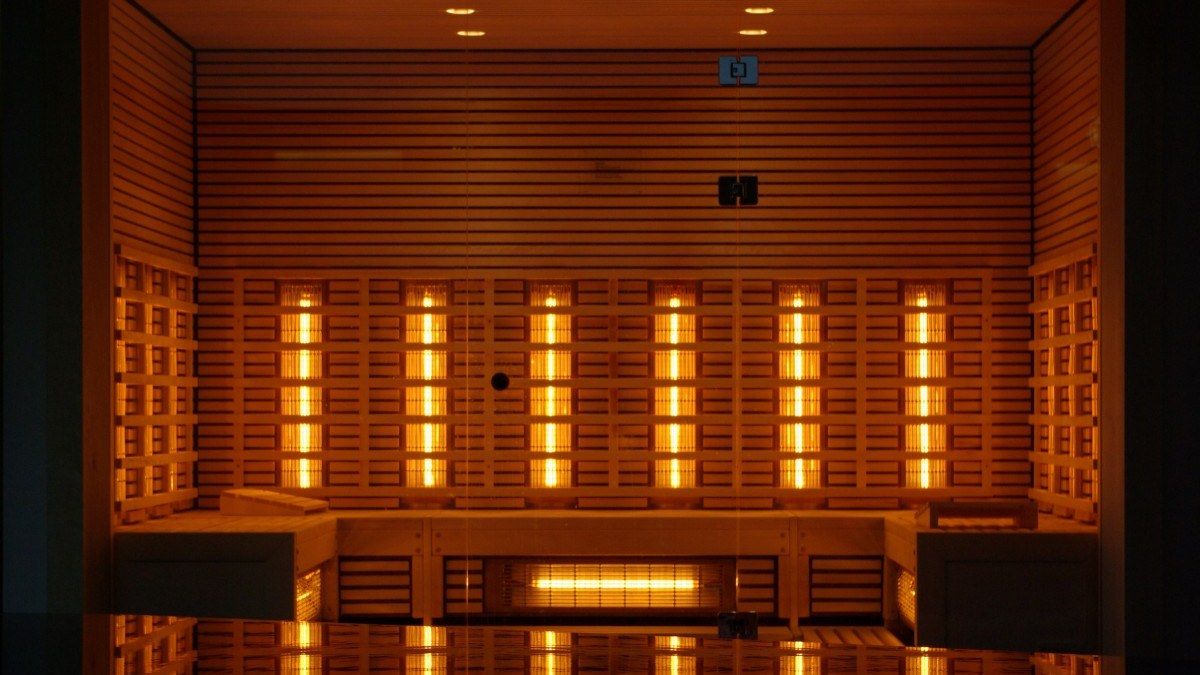
- Hero photo: “Infrared sauna” by solskin, Pixabay (Pixabay Content License), also on PxHere (CC0)